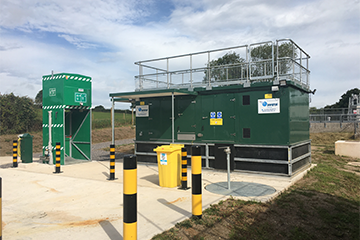
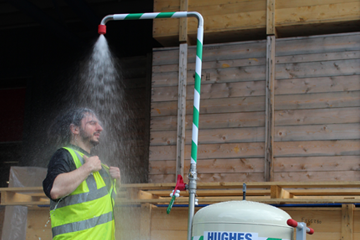
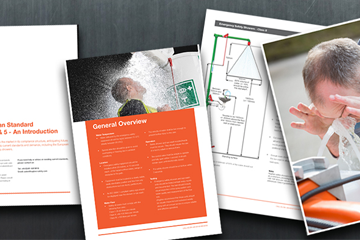
Safety showers and eye washes are designed to be simple to activate in the event of an emergency, going from off to on within a second. Once they have been installed in the correct position, within 10 seconds reach of the hazard with no obstructions as per EN and ANSI standard stipulations, employees must be made aware of their location and how to use them effectively.
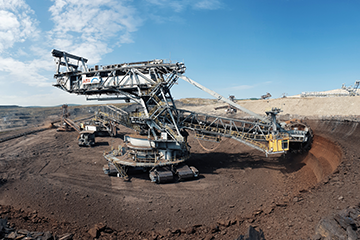
Industries worldwide rely on the steady supply of minerals and metals harvested by the mining industry such as coal, iron ore, bauxite, and potash. Though the final products of mining may not be hazardous, there are many chemical risks that mine workers are exposed to daily.
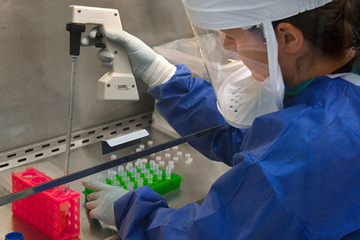
A laboratory incident at UC Berkeley in 2009 caused severe chemical burns to a student. A few drops of the corrosive chemical oleylamine fell onto a researcher’s uncovered forearm. When he realized what happened, he went to the restroom and washed his arm with soap and water for about a minute. Unfortunately, oleylamine is corrosive and hard to wash off the skin.
Over recent years, the hospitality sector has been recovering from the substantial financial losses caused by the pandemic. Alongside these losses came a change in customer priorities, with 55% of UK consumers stating cleanliness being of greater importance since the pandemic.
Cleaning products are the most common hazardous substances used in the hospitality sector. Now, with increased sanitising expected and required, these chemical cleaners are used more frequently and are purchased and stored in higher volumes to keep up with demand.
Working with hazardous chemicals is a huge health and safety challenge, in part mitigated by the provision of essential emergency shower and eye wash equipment. However, add in the issue of high ambient temperatures and supplying suitable decontamination solutions becomes more complicated.
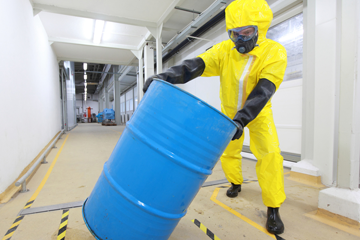
There are very specific rules and guidelines around the storage and transportation of dangerous substances. From the material of the vessel through to the temperature of the room the chemical is stored in, it’s essential that employers mitigate the risks to ensure the safety of employees, the public and property.
Ensuring the safety of workers should be one of your primary concerns as an employer. Investing in safety showers ensures you are investing in the safety of your employees as well as providing yourself with peace of mind that you are compliant to international standards. It can, however, be a challenging task.
Every year, thousands of workers are injured or suffer ill effects due to hazardous substances. Employers are responsible for taking effective measures to control exposure to these substances and to ensure proper procedures are in place in the event of a spill or splash.
There is a wide range of chemicals that can be hazardous to workers health. If a substance is harmful, they will be clearly labelled with the relevant hazard symbol(s). Common materials in everyday use such as paint, bleach, solvent, or fillers are all considered hazardous.
Outokumpu are the global leader in stainless steel, boasting the widest product portfolio in the market. With 100 years of expertise in metals and mining, they aim to become the best value creator in stainless steel.
Their Sheffield facility has different process lines with varying mixtures of acids and caustics, bulk storage areas and effluent treatment. To ensure workers who could be exposed to any of these hazardous substances have access to quality and functional safety showers and eye/face wash equiment, they decided they needed to replace their old safety shower models.
Data storage centre sites store computing and networking equipment for the purpose of collecting, storing, processing, distributing or allowing access to large amounts of data. It's essential to ensure that these sites conform to health and safety guidelines and workers are safe.
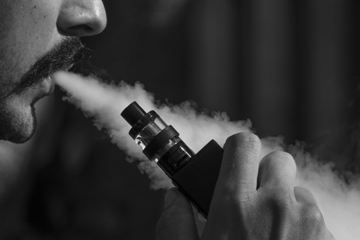
Vaping has made its mark as one of the fastest growing industries of the 21st century. With the number of vapers globally climbing from just 7 million in 2011 to a staggering 41 million in 2018 and a market worth an estimated £15.5 billion, it’s unsurprising that new vape liquid manufacturers are popping up every day.
To ensure that your e-liquid production facility conforms to health and safety guidelines and your workers are safe, it’s important to invest in EN and ANSI compliant showers and eye/face wash equipment.
The series of standards on emergency safety showers installed on industrial and logistics sites, EN15154, have recently been updated to include “Part 5: water overhead body showers for sites other than laboratories ”.