Enquiry List () (0)


- 16 Dec 2025
What Are Hazardous Chemicals?
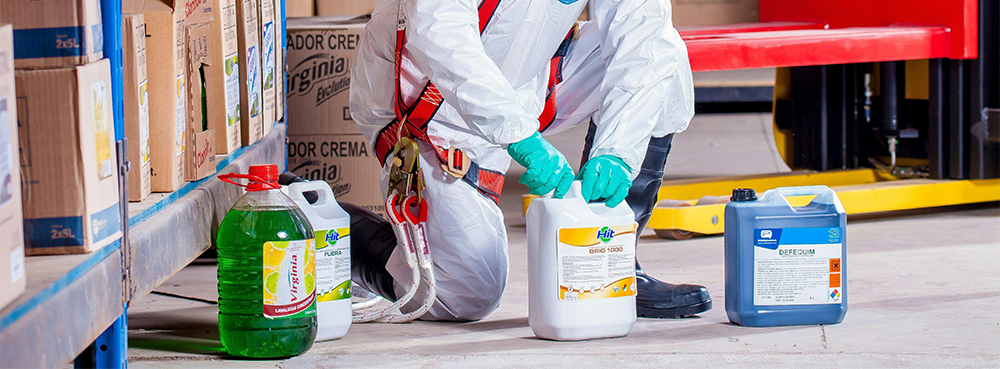
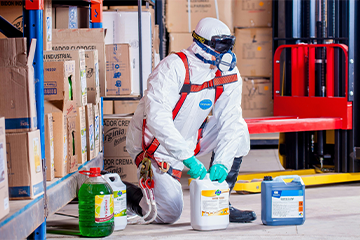
When working in environments that use or produce chemicals, understanding what hazardous chemicals are is essential for maintaining a safe workplace. Hazardous chemicals are substances that pose a risk to health, safety or the environment due to their physical or toxic properties. These can include corrosive acids, flammable solvents or any material capable of causing harm through exposure or improper handling.
Recognising what a chemical hazard is allows employers and employees to implement the right safety controls and emergency procedures. From correct labelling and storage to having the appropriate personal protective equipment (PPE) in place, awareness plays a vital role in preventing accidents.
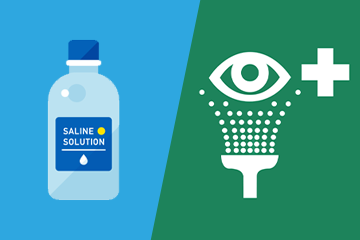
However, even with strict controls, incidents can still occur. In the event of a spill or splash, rapid decontamination is critical. That’s why emergency safety showers and eyewash stations are essential in workplaces handling hazardous substances to ensure chemicals are quickly washed from the skin or eyes to minimise the severity of injury.
In This Guide
- What is a Chemical Hazard?
- How Do You Know If a Chemical is Hazardous?
- Understanding Hazard Symbols
- What Makes a Chemical Hazardous?
- Examples of Hazardous and Non-Hazardous Chemicals
- Why Emergency Equipment is Essential
What is a Chemical Hazard?
A chemical hazard refers to any substance that has the potential to cause harm to people, property or the environment. These hazards arise from the chemical’s physical or toxic properties, how it is used and the conditions in which it is stored or handled. Understanding what a chemical hazard is helps workplaces identify risks and implement the right control measures to protect workers.
Chemical hazards are generally grouped into two main categories:
- Physical hazards are chemicals that can cause damage due to their physical properties. This includes substances that are flammable, explosive, oxidising or reactive, which can result in fires, explosions or other dangerous reactions.
- Health hazards are chemicals that can harm a person’s body when inhaled, ingested or absorbed through the skin. Common examples include toxic, corrosive, irritant or sensitising substances that may cause burns or other adverse health effects.
International safety systems such as the Globally Harmonised System (GHS) and OSHA’s Hazard Communication Standard (HazCom) define and classify chemical hazards to ensure consistent labelling and communication worldwide. These frameworks help employers and workers recognise the hazards of chemicals, take proper precautions and respond effectively in an emergency.
How Do You Know If a Chemical is Hazardous?
Knowing whether a chemical is hazardous is vital for ensuring safe handling, storage and emergency response. Fortunately, there are clear systems in place to help identify and understand these risks before an incident occurs.
The first step is to check the Safety Data Sheet (SDS). Every hazardous chemical must have an SDS, which provides detailed information about its composition, potential hazards, safe handling procedures and emergency measures. It outlines what to do in case of a spill, leak or exposure, and specifies the type of PPE required. Reviewing the SDS allows workers to understand the level of risk and how to manage it safely.
Another way to recognise hazardous materials is by reading container labels and hazard symbols. Under the GHS, all chemical containers must display standardised labels that clearly communicate the nature of the hazard. These labels include:
- Signal words such as ‘Danger’ or ‘Warning,’ indicating the severity of risk.
- Pictograms, which are symbols (like flames or skull and crossbones) that visually represent the type of hazard.
- Hazard statements describing the specific danger, such as ‘causes severe skin burns’ or ‘highly flammable liquid.’
These labels and symbols are used on chemical containers to quickly alert workers to potential risks, ensuring they take proper precautions. Recognising these visual warnings is essential for preventing accidents and responding effectively in emergencies where exposure occurs.
Understanding Hazard Symbols
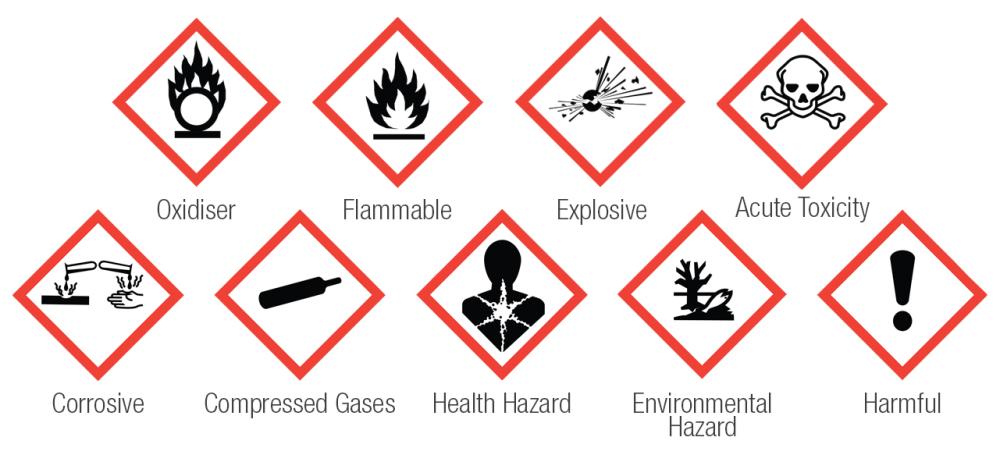
Hazard symbols play a crucial role in helping workers quickly identify the dangers associated with a chemical. Under the GHS, each pictogram represents a specific type of hazard, making it easier to understand the potential risks at a glance – even across different languages and regions. Knowing what these symbols mean enables employees to handle substances safely and respond appropriately in an emergency.
One of the most recognisable symbols is the skull and crossbones. This symbol warns that the chemical is toxic or fatal if swallowed, inhaled or absorbed through the skin. Substances carrying this label, such as certain pesticides or industrial solvents, can cause serious harm even in small amounts.
Other common GHS hazard symbols include:
- Flame: indicates a flammable or combustible substance, such as alcohols or fuels, which can ignite easily.
- Corrosion: shows that a chemical can cause severe skin burns or eye damage, or corrode metals (for example, acids or alkalis).
- Health hazard: used for substances that may cause longer-term health effects.
- Exclamation mark: represents less severe health risks such as skin or eye irritation, or a general warning for harmful substances.
These hazard symbols are used on chemical containers to provide instant visual warnings and support safe workplace practices.
What Makes a Chemical Hazardous?
Not all chemicals are dangerous, but many can become hazardous depending on how they are used or handled. Understanding what makes a chemical hazardous helps workplaces identify potential risks and put the right control measures in place to prevent harm.
1. Toxicity or Corrosiveness
The inherent properties of a chemical, such as whether it is toxic, corrosive or reactive, largely determine the type of hazard it presents. Harmful chemicals can cause poisoning or organ damage, while corrosive substances, like acids and alkalis, can burn skin and eyes on contact.
2. Concentration
The strength or concentration of a chemical affects how harmful it can be. For example, a diluted cleaning solution might be relatively safe, but a concentrated version of the same substance could cause severe burns or other health issues.
3. Route of Exposure
The way a chemical enters the body also influences its danger level. Common routes of exposure include inhalation, skin contact and ingestion. Some substances are hazardous only if inhaled as vapour or dust, while others are dangerous through direct contact with the skin.
4. Quantity and Duration of Exposure
The amount of chemical involved and how long a person is exposed play a major role in determining the level of risk. Even mild irritants can become harmful with prolonged or repeated exposure.
It’s important to remember that not all chemicals are hazardous, but even those considered safe can become dangerous under certain conditions.
Examples of Hazardous and Non-Hazardous Chemicals
Many workplaces handle chemicals that vary in risk level, from mild irritants to highly corrosive substances. Understanding the difference between hazardous and non-hazardous chemicals ensures the right precautions and emergency response equipment are in place if an incident occurs.
Common hazardous chemicals where a safety shower or eyewash station can make a difference include:
- Sulphuric acid: a highly corrosive chemical used in manufacturing and laboratories. If it splashes onto the skin or into the eyes, it can cause severe burns. Immediate use of a safety shower or eyewash station helps wash away the acid before it causes deeper tissue damage.
- Ammonia: found in cleaning products and refrigeration systems, ammonia can irritate or burn the skin and eyes. Rapid rinsing under a temperature-controlled emergency shower, such as the STD-TC-100KS/45G, or eyewash helps reduce the severity of chemical burns and prevent long-term injury.
- Sodium hydroxide (caustic soda): commonly used in industrial cleaning and soap production, this alkali can cause serious burns on contact. Flushing the affected area with tepid water from a safety shower or eyewash station dilutes and removes the chemical quickly.
- Acetone: a flammable solvent used in laboratories and manufacturing. While less corrosive, it can cause irritation or dermatitis if spilled. Rinsing the skin under a safety shower helps prevent dryness, irritation or absorption through the skin.
- Hydrochloric acid: commonly used in metal cleaning and laboratory applications. Contact can cause immediate burning and tissue damage. A safety shower or eyewash station helps flush the acid away before it penetrates deeper layers of skin or eye tissue.
- Hydrofluoric acid: extremely dangerous and capable of deep tissue damage. Even small splashes require immediate flushing for at least 15 minutes under a safety shower or eyewash to prevent severe burns.
- Chlorine: used in water treatment and cleaning products, chlorine can irritate the eyes and skin. Rinsing exposed areas under a safety shower helps relieve irritation and remove chemical residue.
- Formaldehyde: a preservative and disinfectant that can cause eye and skin damage. Quick rinsing can reduce irritation and limit absorption through the skin.
- Hydrogen peroxide: used in laboratories and disinfecting processes, concentrated solutions can cause bleaching and burns. Immediate flushing dilutes the chemical and prevents further tissue damage.
- Phenol: used in resins and disinfectants, phenol can be absorbed through the skin and cause serious burns. Continuous rinsing is essential to limit absorption and wash away the substance.
- Battery acid: the sulphuric acid solution is frequently encountered in maintenance or automotive environments. Splashes can cause corrosive burns, so rapid rinsing helps minimise damage.
Why Emergency Equipment is Essential
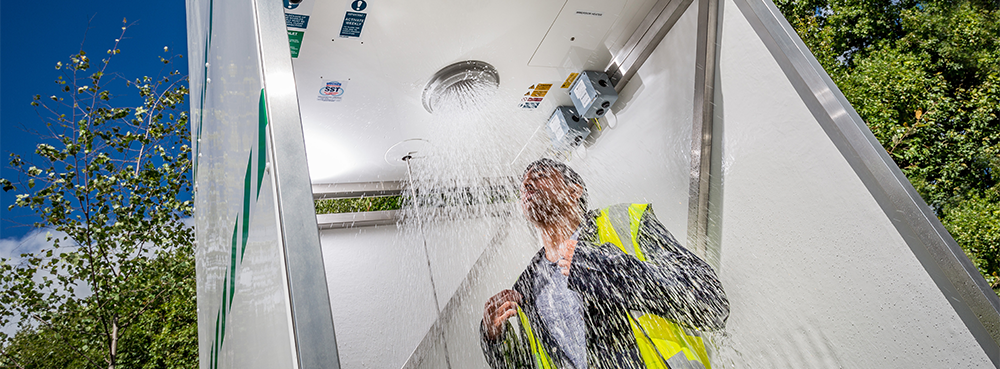
In workplaces where hazardous chemicals are used, rapid decontamination can make the difference between a minor incident and a serious injury. When a chemical comes into contact with the skin or eyes, every second counts. The longer the substance remains, the greater the potential for burns, irritation or absorption into the body.
That’s why safety showers and eyewash stations are a vital part of any chemical handling area. They provide an immediate source of clean tepid water to flush away hazardous substances, helping to reduce the severity of burns and prevent long-term damage. By ensuring exposed areas are thoroughly rinsed within the first few seconds of an accident, this equipment supports effective first aid before medical assistance arrives.
To be effective, emergency equipment must also be installed in the right location. ANSI/ISEA Z358.1 and EN15154 standards recommend that safety showers and eyewash stations are:
- Positioned within 10 seconds’ reach of where hazardous chemicals are used or stored
- On the same level as the potential hazard
- Kept free from obstructions such as doors or stored materials
- Clearly visible and well-lit, with signage that ensures workers can locate them quickly during an emergency
Hughes designs and manufactures a wide range of emergency safety showers and eyewash stations that meet these standards. These include plumbed-in, self-contained and temperature-controlled units to suit both indoor and outdoor environments. Each product is built to deliver a consistent water flow for the required 15-minute decontamination period, ensuring full compliance and reliable performance when it’s needed most.
To maintain this level of performance, it’s essential to carry out regular testing, maintenance and staff training. Routine weekly activations confirm that equipment is working correctly, while annual inspections ensure continued compliance with international standards. Training employees on proper use ensures they can respond quickly and confidently in an emergency, helping to protect people from serious chemical injuries.
To ensure your site is fully prepared for immediate decontamination in the event of a spill or splash of a hazardous chemical, explore the range of Hughes products and provide essential protection when every second counts.