Enquiry List () (0)


- 2 Feb 2026
Chemical Hazards in Food Production
Chemical-related incidents account for a significant share of workplace accidents in food and beverage manufacturing. From caustic detergents and aggressive sanitising agents to ammonia refrigerants and concentrated reagents used in testing labs, food facilities rely on chemicals that can cause serious harm if something goes wrong.
Food production environments are uniquely demanding. High hygiene standards, frequent washdown, tight turnaround times and regulatory scrutiny mean chemicals are handled daily, often under pressure. While these processes are essential for food safety, they also increase the likelihood of splash incidents, leaks or accidental contact if controls fail or procedures slip.
Everyday tasks, such as rinsing down a line, switching clean-in-place (CIP) cycles, unloading chemicals, carrying out maintenance, all carry the potential for splash injuries or exposure if controls fail or procedures slip.
In this guide, we’ll explore where and how chemical hazards arise in food manufacturing, the types of substances that pose the greatest risk, and how to identify high-risk zones across a facility.
You’ll also find practical control strategies and emergency response guidance to help ensure that when an incident happens, your team knows exactly what to do and has the right equipment within reach.
In This Guide
- What Chemical Hazards are in the Food Industry?
- Key Hazard Zones in Food Processing Facilities
- Worker Injuries and Health Risks
- Preventive Strategies and Best Practices for Chemical Safety in Food Plants
- Why Emergency Showers and Eyewashes are Important for Emergency Response and Decontamination
- Emergency Decontamination Solutions for Food & Beverage Facilities
- Key Takeaways
- Contact Hughes for Expert Advice
What Chemical Hazards are in the Food Industry?
In a food or beverage facility, chemical hazards arise from routine processes designed to protect hygiene, maintain equipment and keep production running. The risk comes from how workers interact with chemicals and how easily a routine task can turn into an exposure incident.
The most common sources of chemical hazards in food and drink manufacturing include:
Cleaning and Sanitising Agents
Strong alkaline or acidic detergents, chlorine-based sanitisers and peroxides are essential for hygiene but are also some of the most common causes of splash injuries. Incidents usually occur during mixing, transfer or manual cleaning, especially when concentrations are incorrect or residues aren’t rinsed away.
Because these chemicals are used repeatedly throughout every shift, even minor lapses can quickly lead to skin or eye exposure.
CIP Chemicals
CIP systems circulate high-strength caustic or acidic solutions through pipes, tanks and fillers, often at elevated temperatures and pressures. Exposure risks arise during chemical preparation, hose connection or disconnection, fault finding or unexpected spray release. Incomplete rinsing can leave aggressive residues on equipment surfaces, creating a contact hazard for anyone working downstream.
Refrigerants
Industrial refrigeration systems in food production frequently rely on ammonia. Even small leaks can cause irritation or burns to skin and eyes, particularly in enclosed areas such as plant rooms, cold stores or loading bays. Where these systems are in use, emergency response must be immediate.
Process Chemicals and Reagents
Chemicals used for testing, pH control or formulation may be handled in smaller quantities but can still cause significant injury if spilled or splashed. These hazards are often concentrated in laboratories and quality control areas, which are sometimes overlooked when planning emergency equipment placement.
Lubricants, Solvents and Maintenance Chemicals
Hydraulic oils, greases, degreasers and solvents are widely used during maintenance tasks. Exposure typically occurs during leaks, spills or overspray, particularly when work is carried out under time pressure or during shutdowns.
Residues, Incompatible Mixing and By-Products
Chemical hazards can also arise when incompatible products are stored together, when cleaning agents aren’t fully rinsed away or when by-products accumulate on heated surfaces. While less frequent, these scenarios can still result in sudden contact incidents during cleaning or maintenance.
Key Hazard Zones in Food Processing Facilities
Chemical hazards tend to cluster in areas where chemicals are stored, mixed, heated, circulated or transferred. Identifying these zones allows facilities to position controls, training and emergency equipment where they’ll have the greatest impact.
Cleaning and CIP Areas
Washdown zones and CIP systems are among the most chemically intensive areas of a plant. Frequent handling of concentrated detergents, rapid changeovers and pressurised systems mean even a small error can lead to exposure.
Clear standard operating procedures (SOPs), rinse verification checks, disciplined chemical storage and strong record-keeping are essential here, but residues can remain on floors or equipment. Strategically located emergency showers and eyewashes ensure immediate decontamination is always close by.
Refrigeration and Cold Storage Zones
Plant rooms, cold stores and loading bays are hazard zones where leaks, valve faults or maintenance activities can expose workers to harmful vapours or direct contact with refrigerant. These areas typically have confined layouts and limited airflow, heightening the impact of even small releases.
Good ventilation, active leak detection and a clear escape-and-response protocol are vital. Safety showers and eyewash stations should be positioned so workers can reach them quickly, even when visibility is reduced or cold-room layouts are tight.
Process and Packaging Lines
During processing and packaging, the risks are less about handling chemicals directly and more about where residues, by-products or migrating substances accumulate. For example:
- Equipment surfaces may still hold cleaning chemicals from earlier cycles
- Heated stages can create or concentrate process by-products
- Packaging materials or adhesives may introduce additional chemical exposure risks during maintenance or troubleshooting
Because these lines are high-traffic production areas, issues usually arise when staff carry out adjustments, unblock equipment or respond to alarms. Clear hygiene zoning, good line-clearance checks, and well-positioned emergency response equipment help contain incidents before they escalate.
Maintenance, Repair and Storage Areas
Engineering workshops, chemical storage rooms and maintenance corridors bring another category of risk. Solvents, lubricants, degreasers and hydraulic fluids may not touch food, but they’re a recurring hazard for technicians. Spills, leaks or overspray can affect anyone working nearby, and poorly labelled or stored chemicals can easily be mistaken or mishandled.
These zones perform best with strong labelling, tidy storage, PPE discipline and a layout that makes emergency decontamination equipment easy to reach. Because maintenance staff often work under time pressure or during shutdowns, fast access to eyewashes, showers and spill-response tools become especially important.
Worker Injuries and Health Risks
When chemical exposure occurs in a food or beverage facility, the effects on workers can be immediate and severe. Many substances used in production are corrosive, irritating or harmful on contact and even a momentary splash from one of these dangerous chemicals can lead to injury.
The most common injuries include:
- Chemical burns to skin and eyes, including tissue damage
- Irritation or injury from vapours and aerosols
- Acute reactions from accidental over-concentration or incompatible mixing
- Secondary injuries during and after exposure because of slippery floors, impaired vision, panic or disorientation
The severity of injuries depends on how quickly flushing begins. The faster a chemical is washed from the skin or eyes, the less severe the injury is likely to be.
Preventive Strategies and Best Practices for Chemical Safety in Food Plants
Preventing chemical incidents in food and beverage facilities is about managing hazardous substances with clarity, consistency and control. The following strategies form the backbone of an effective chemical safety programme, helping teams reduce the chance of exposure and respond confidently if something goes wrong.
Hazard Identification and Risks Assessment (HIRA)
A solid safety programme starts with understanding the chemicals you use and the ways workers might encounter them. A practical HIRA for food manufacturing typically involves:
- Identifying all chemical types on site
- Mapping hazard zones across the facility
- Defining exposure routes
- Evaluating likelihood and severity
- Integrating findings into existing facility plans
The goal is a realistic, workable picture of where injuries could happen and what could be done to stop them.
Proper Chemical Handling, Storage and Use Protocols
Safe handling begins long before a chemical is applied or mixed. Good practice includes:
- Using approved chemicals appropriate for the task, especially where food-contact surfaces are involved
- Diluting correctly, using dedicated dosing systems or clear instructions to prevent over concentration
- Storing chemicals securely, with segregation between food and non-food materials and clear zoning for flammables, corrosives or oxidisers
- Keeping SDS documentation accessible, so staff can quickly check hazards, first aid and response steps
- Labelling everything correctly, including secondary containers, to avoid mistaken identity or incompatible mixing
Training, PPE and Safety Culture
Even the best procedures fall short without confident, well-trained people. Strong programmes include:
- Regular training on chemical risks, correct handling, dilution, storage and disposal
- PPE use that matches the hazard, including gloves, goggles, aprons or protective suits depending on the task
- Spill response and decontamination training, so workers instinctively know what to do and where to go when an incident happens
- Clear signage and communication, helping staff identify hazards quickly
- Accident reporting and review, ensuring lessons are shared and improvements are made
A strong safety culture is what turns procedures into everyday practice, ensuring workers stay protected even during the busiest shifts.
Why Emergency Showers and Eyewashes are Important for Emergency Response and Decontamination
When chemical exposure occurs in a food processing environment, the difference between a minor injury and a life-altering one is often measured in seconds. Emergency showers and eyewash stations are the frontline of protection when workers come into contact with hazardous substances.
Incidents in food and beverage facilities typically happen fast and without warning. Because chemicals act immediately on contact, rapid washing is the only effective way to limit the severity of injury. A worker who can begin flushing within seconds stands a significantly better chance of reducing chemical penetration and preventing deeper tissue damage.
To ensure that emergency decontamination equipment works as needed during an incident, it must meet specific performance expectations laid out by the standards EN15154 and ANSI Z358.1. Requirements typically cover:
- Tepid water provision to prevent thermal shock and encourage full 15-minute flushing
- Clear accessibility, with equipment located close to chemical handling areas and unobstructed routes
- Regular testing and maintenance to ensure consistent flow, reliable activation and clean water delivery
- Visible signage and lighting so stations can be identified instantly, even under stress
- Protective covers or lids for eyewashes to prevent contamination
These standards exist because inadequately maintained or poorly located equipment can delay decontamination, undermining the purpose of the installation.
Emergency Decontamination Solutions for Food & Beverage Facilities
Food and beverage environments require emergency equipment that can maintain reliability in hygienic conditions.
Emergency Safety Showers
Emergency showers provide rapid full-body flushing following chemical splashes during cleaning, CIP changeovers or maintenance tasks. In food production areas, they should be designed to perform reliably in wet, corrosive and washdown-intensive environments.
For sites where cleaning equipment is kept outside, our range of frost-protected showers ensure functionality even in colder months. The EXP-AH-5GS/45G features an ASA closed bowl eyewash to protect the diffusers from external contaminants while the trace-tape heating, polyethylene jacket and foam insulation all help to provide protection to the pipework in freezing conditions.
In some instances, the spray and contaminated water will need to be carefully contained to ensure a sterile environment, cubicle units with strip screen are the ideal solution as they are enclosed to contain the contaminated water with an integral drain sump when the shower is activated.
Emergency Eyewash Stations
Eyewash stations are essential wherever chemicals are handled, including cleaning areas, laboratories and dosing points. Immediate eye flushing is critical to reducing the severity of injury following splashes or aerosol exposure.
Combination Shower and Eyewash Units
Combination units offer body and eye protection from a single location. They’re particularly suitable for high-risk zones such as CIP areas, plant rooms and maintenance spaces where multiple exposure risks exist.
Hughes offer several combination safety shower and eyewashes. Models like the EXP-18GS/85G can have the safety shower and eyewash activated simultaneously or independently through different activation methods. This means if a casualty has suffered from chemical splashes to their eyes, they will not automatically have their body drenched if this is not required.
Key Takeaways
Chemical hazards are an unavoidable part of modern food and beverage production, but serious injuries don’t have to be. By understanding where these risks arise, recognising the substances that cause harm and putting strong preventive controls in place, food manufacturers can significantly reduce the likelihood of exposure. Yet even the best procedures and training cannot remove risk entirely; unexpected splashes, leaks and contact incidents can still occur in the busiest, most well-managed plants.
When they do, the outcome depends on one crucial factor: how quickly workers can begin decontaminating the affected area. Emergency safety showers and eyewash stations provide that immediate lifesaving response. Positioned correctly and maintained in line with standards, they give teams the confidence that help is never more than a few steps away and that a moment’s exposure won’t become a lasting injury.
Contact Hughes for Expert Advice
If uncertain of your site’s safety shower and eyewash requirements, get in touch with the Hughes team. We have over 55 years of manufacturing excellence in safety equipment and a team of experts knowledgeable in solutions for every challenge or limitation. Submit your enquiry today to hear from our expert team.
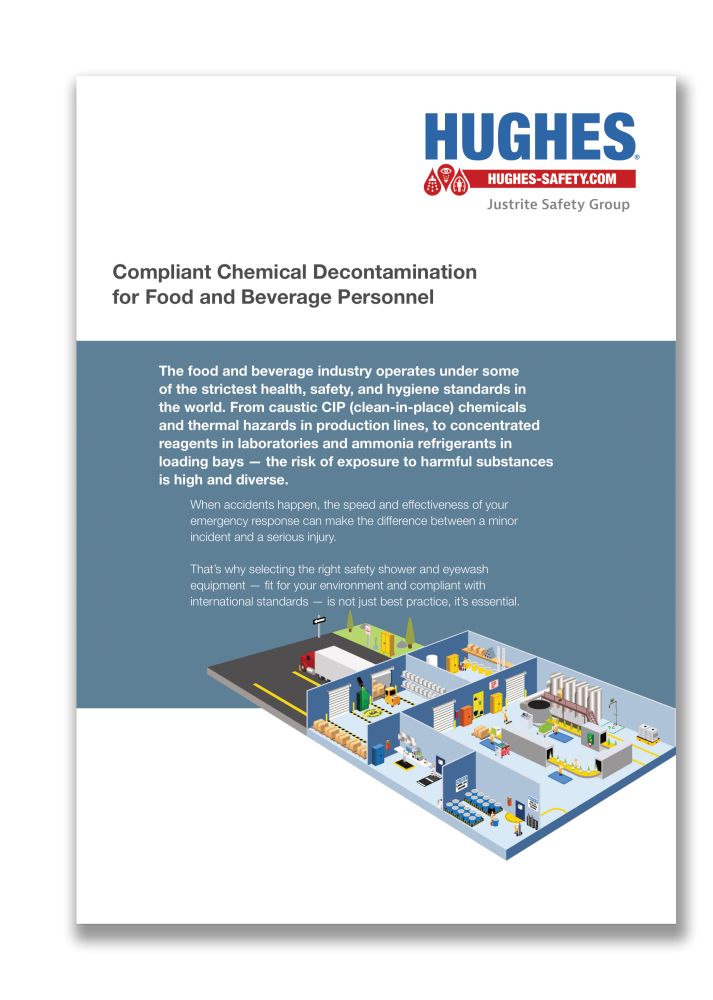
Browse our full range of recommended safety showers and eye washes for all areas of your food and beverage site in our brochure.